Santiago Iglesias Educational Society
LU#3 IBEW CLUb
LU#3 IBEW CLub

Santiago Iglesias Educational Society

Our Legacy



Founded in 1958
We stand on the foundation built by those before us: their vision, grit, and relentless effort. But a true legacy isn't meant to sit in the past, and it isn't something we merely admire from a distance. It is the spark that drives us forward.
Now, the responsibility is ours. Carrying the torch means living those same values today. It means showing up with courage, protecting what was hard-won, and honoring the path paved for us. We don't just hold the line; we push it further, generation after generation, shaping what comes next until it becomes an undeniable part of who we are.


*Click on a Name to learn their history*


Jose Lopez
The Jose Lopez Memorial Scholarship honors his legacy by investing in the education and future of young leaders from the community he served so passionately.
HONORING A LEGACY. BUILDING TOMORROW'S LEADERS.
Jose Lopez's story is one of resilience, service, and unwavering dedication to his com-munity. Born and educated in Puerto Rico, he came to New York City in 1949, shortly after graduating from high school. From the very beginning, he made it his life's mission to uplift others - offering a helping hand wherever it was needed.
His professional journey began at Keg-O Products Corporation in the lamp and shade di-vision. There, he joined Local #3 of the International Brotherhood of Electrical Workers, where the seed was planted for a lifelong commitment to the labor movement.
In 1950, Jose enlisted in the U.S. Army and served with honor in Korea as a platoon ser-geant. He was a proud member of the renowned 103rd Battalion, 65th Infantry Regiment
"Borinqueneers," the only Latino-segregated combat unit in the U.S. Army. His bravery earned him a Purple Heart.
After his military service, Jose returned to New York and re-entered the electrical in-dustry, becoming a shop steward in the BAL Division of Local #3. His leadership quickly grew - he served on the Negotiating, Advisory, and Pension Committees - and in 1958, he participated in a historic labor study tour of Puerto Rico. Inspired by this experience, he co-founded the Santiago Iglesias Educational Society of Local #3, later serving as its president for many years.
In 1967, he helped establish the Santiago Iglesias Credit Union, acting as its president for four years and treasurer for two. He remained deeply active in the Hispanic community throughout his life. Appointed by Governor Nelson Rockefeller in 1966 to the State Board of Social Welfare, Jose also served on the boards of the Puerto Rican Association for Community Affairs, the Hispanic Labor Committee, and the Labor Council for Latin American Advancement. He was instrumental in organizing the Puerto Rican Day Parade in New York City and celebrated Puerto Rican culture through the Puerto Rican Folklore Fiesta.
That same year, AFL-CIO President George Meany appointed Jose as a Field Representative for Region 7, covering New York, New Jersey, and Puerto Rico. In this role, he traveled extensively across Central and South America, teaching trade union principles and organizing strategies.
From 1968 to 1973, he played a vital role in supporting Cesar Chavez and the United Farm Workers during the national grape boycott. Jose traveled the country delivering speeches, organizing, fundraising, and rallying consumer and union support - efforts that helped farm workers in California secure their first union contract in 1970.
He continued his education, carning an Associate's Degree in Labor Studies from the Harry Van Arsdale School of Labor Studies. In the late 1970s, encouraged by Harry Van Arsdale Jr., he motivated many members of the Santiago Iglesias Society to pursue higher education - a path many had never considered.
In the early years of New York's growing Latino labor presence, Local #3's leadership under Harry Van Arsdale Jr. began to recognize the vital contributions of Puerto Rican workers. Van Arsdale believed deeply that the labor movement must represent all who labor — regardless of language or origin — and he opened the door for greater Latino participation within the union. Inspired by that example, Jose Lopez carried the torch forward. As New York's Latino population expanded beyond its predominantly Puerto Rican roots in the 1970s, he understood that unity among all Spanish-speaking communities — Dominican, Colombian, Cuban, Mexican, and others — was essential to strengthening the labor movement. Amid the rivalries that often arise among immigrant groups, Jose saw opportunity rather than division. He worked tirelessly to bridge cultural and national differences, welcoming every voice into the union family.
Through his leadership, the Latino presence within Local #3 evolved from a single community's struggle into a collective movement — one that embodied solidarity, di-versity, and shared strength.
Jose also led the recruitment of Latino workers into the Local #3 apprenticeship pro-gram, a program that still exists today. He believed deeply in the power of union membership as a bridge to the middle class.
He counted both Harry Van Arsdale Jr. and Cesar Chavez as personal mentors. He believed in political action, in the strength of collective unity, and most of all, in the duty of leadership to speak for those who have no voice.
A loyal and tireless union advocate, Jose was respected by all who worked with him.
He was the ultimate coalition and bridge builder - the secret to his success.
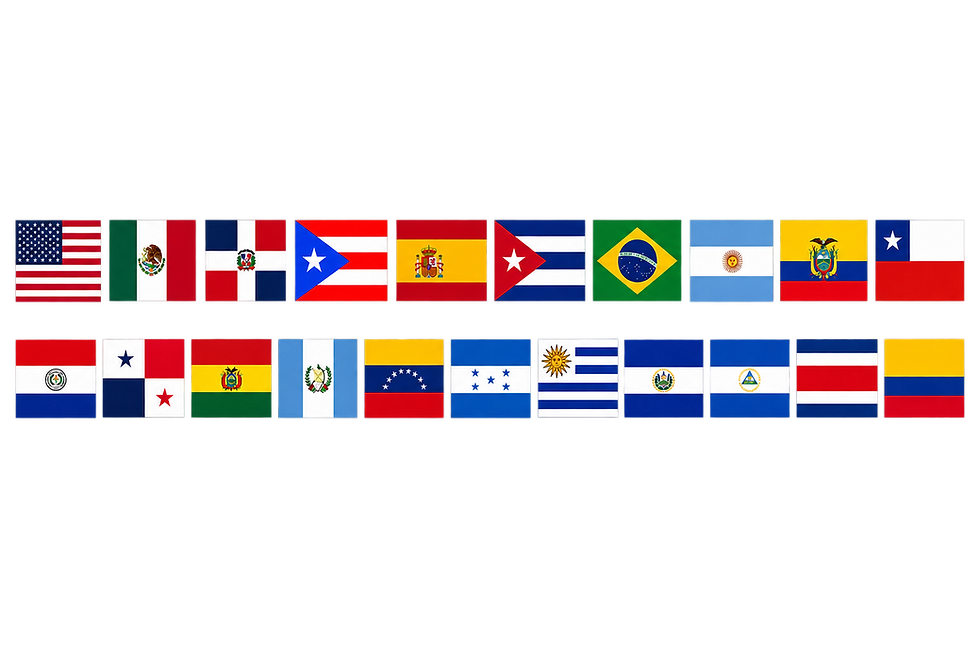
As we honor the life and legacy of Jose Lopez and reflect on his passing, let us take a moment to remember one of his enduring contributions to our organization. Long before today, he had the foresight to create and design the logo we proudly cherish today.
Though our organization's roots are in Puerto Rico, Jose understood the broader vision
one that includes and celebrates all the Spanish-speaking countries represented in this room today. His vision and leadership continue to inspire us and bring us together
carrying forward the very flame that was lit sixty-five years ago, burning just as brightly in our hearts today.
Jose is survived by his loving wife Gloria, his daughter, Nilda, his sons, Edwin and Jose, his grandchildren, Jose Jr., Emilia, Daniel, and great grandchildren, Lucas and Rafael - his legacy carried forward in each of them.
Helped establish the Santiago Iglesias Educational Society in 1958 and served as its President for many years.
In 1966, appointed by Governor Nelson Rockefeller to the New York State Board of Social Welfare.
Active leader in the Hispanic community and on the boards of the Puerto Rican Association for Community Affairs, the Hispanic Labor Committee, the Labor Council for Latin American Advancement, and Puerto Rican Folkhore Fiesta.
Helped organize the Puerto Rican Day Parade, celebrating cultural pride and unity.
Appointed by AFL-CIO President George Meany in 1967
as Field Representative for Region No. 7 (New York, New Jersey & Puerto Rico).
From 1968 to 1970, assisted the United Farm Workers during the successful boycott of California grapes.
Through leadership, advocacy, and unwavering dedication, Jose Lopez helped build stronger communities and opened doors for future generations. This scholarship ensures that his commitment to education, justice, and opportunity continues to make a difference.


Hector Manuel Muniz was born and raised in the Bronx, New York. He was one of six children born to Hector Luis and Carmen Muniz, who emigrated from Puerto Rico to New York in the late 1940s. Raised with strong family values, Hector carried with him a deep sense of pride, dedication, and commitment throughout his life.
Hector graduated from Samuel Gompers High School in 1980 and was soon initiated into Local Union No. 3, IBEW, where he began his apprenticeship.
From 1980 to 1984, he attended Empire State College, earning an Associate Degree in Labor Studies. In 1986, he became a journeyman electrician.
Throughout his career, Hector remained committed to improving his skills and expanding his professional qualifications. He completed numerous courses through the Educational and Cultural Trust Fund of the Joint Industry Board, including Rigging, Asbestos Restricted Handler, CPR, Transit Safety, Confined Space, Lock-Out/Tag-Out, OSHA Safety, Con Edison training, and Shop Steward Training. These qualifications reflected his dedication to safety, professionalism, and leadership within the electrical industry.
During his years as a proud member of Local Union No. 3, Hector served as both a foreman and shop steward. He was respected for his work ethic, leadership, and commitment to representing his fellow union members with integrity.
Hector was also a dedicated member of the Santiago Iglesias Educational Society for more than 35 years. He served as a committeeman and actively participated in many Society programs and events, including Cosmo's Kids, the Thanksgiving Food Drive, and various club activities. His service to the Society reflected his belief in brotherhood, community, and giving back.
A passionate athlete and respected team leader, Hector was an active member of the Santiago Iglesias Educational Society softball team for over 35 years and served as a manager and coach for 18 years. Under his leadership, Santiago Iglesias became part of one of the winningest teams in Local Union No. 3 softball history. Hector played a major role in that success, helping manage and coach the team through 15 of its 18 championships. His love for the game, loyalty to his teammates, and leadership on and off the field made him a respected and beloved figure within the Society.
He was also a member of the Brooklyn Bedsole Club and the Bronx Acorn Club.
In 2018, Hector's sudden passing left a tremendous void in the softball team and in the many lives he touched. His legacy continues through his son, Daniel A. Muniz, who carried on his father's commitment to the Santiago Iglesias Educational Society.Hector resided in the Bronx with his beloved wife. Together, they raised three children: Hector Jr., Daniel A., and Daisy Y. He was also the proud grandfather of seven grandchildren: Jaden, Daisy L., Emmanuel, Daniel Jr., Noah, Hector III, and Zachariah.
Among Hector's greatest joys were playing softball, golfing, and raising pigeons.
He is dearly missed by his family, friends, union brothers and sisters, and all who had the privilege of knowing him. His life of service, leadership, family devotion, and commitment to the Santiago Iglesias Educational Society will continue to be honored through this scholarship.
Hector Manuel Muñiz
A LIFE OF LEADERSHIP. A LEGACY OF SERVICE. A BROTHERHOOD THAT ENDURES.
Jose Nũñez
A life of faith. A legacy of hard work.
A commitment to family, brotherhood, and community.
Mr. Jose Núñez, founder of Nunez Electric, Incorporated, began with a vision to establish a New York City-based electrical construction company in 1987. Through commitment, determination, hard work, and a dedication to quality workmanship, he built a company that earned a respected reputation throughout New York City's electrical construction industry.
Born and raised in Baitoa, a small town in the Dominican Republic, Mr. Núñez was blessed with exceptional intelligence, talent, and perseverance. These qualities became the foundation of his drive to overcome challenges and create a better future for himself, his family, and those who would one day work beside him.
Mr. Núñez immigrated to the United States in 1965 with limited connections and began his career as an electrician's helper.
His path changed significantly in 1972 when the company he worked for became organized, making him and his team members of Local Union No. 3, IBEW.
This important chapter also led him to the Santiago Iglesias Educational Society, where he found comfort, support, and brotherhood among fellow members who stood by him through both difficult and successful times.
Among those brothers were Frank Felipe, Luis Restrepo, Louis Correa, Edwin Lopez, and many others whose friendship and support became an important part of Mr. Núñez's journey. Their encouragement helped strengthen his connection to Local Union No. 3 and the Santiago Iglesias Educational Society.
In 1994, with honor, humility, and great appreciation, Mr. Núñez requested that Brother Edwin Lopez represent Nunez Electric, Incorporated as the company entered its next chapter and became a signatory contractor under the collective bargaining agreement of Local Union No. 3.
Throughout his career, Mr. Núñez faced obstacles and challenges, but each one strengthened his determination. His tenacity, integrity, and relentless desire to succeed became defining qualities of his life and work.
He remained committed to providing for and protecting his family, supporting his fellow electrician brothers and sisters, serving the community, and helping create opportunities for future generations.
The unwavering support of the Santiago Iglesias Educational Society and its members helped clear the path for the continued growth and success of Mr. Núñez's dream. His story stands as an example of perseverance, gratitude, leadership, and faith.
It is Mr. Núñez's honor to help pave a path forward and open the way to excellence for generations to come.
''A Dios sea toda la gloria.''
The labor movement is built by its members and strengthened by the brotherhood they share. Brother Efrain Diaz was one of those dedicated members whose life reflected service, loyalty, and commitment to others.
During the 1950s, New York City and the outer boroughs were home to more than one million manufacturing jobs, many of which were filled by Puerto Ricans who migrated to the mainland during Operation Bootstrap. Brother Diaz was among those hardworking Puerto Rican workers who helped shape that era.
He was initiated into Local Union No. 3 in 1952, working in the Lamp and Shade Division as a wire assembler.
In 1958, the Santiago Iglesias Educational Society was founded through the leadership and foresight of Harry Van Arsdale Jr. to meet the needs of Spanish-speaking members of Local Union No. 3.
In 1960, Brother Diaz joined the Society and became one of its loyal and active members. He played a vital role in organizing taxi cab drivers, fought to establish a $1.50 minimum wage, and served as a steadfast volunteer in the Flechesters Housing community.
Within the Santiago Iglesias Educational Society, Brother Diaz was always eager to make a difference. He became President of the SIES Credit Union and also served as Vice President of the club.
One of his greatest strengths was his willingness to assist others, teach younger members, and remind them of the importance of the labor movement. He often spoke about how fortunate members were to be part of Local Union No. 3. Through his words, actions, and example, Brother Diaz became a guiding force within the Society.
Brother Diaz remained active with the Santiago Iglesias Educational Society until the day of his passing. His dedication to the Society was not limited to titles or positions; it was shown through his consistent service, his mentorship, and his commitment to strengthening the bonds of brotherhood.
After retiring, Brother Diaz was diagnosed with cancer at the age of seventy-nine and later suffered kidney failure. As dialysis became necessary, he and his family faced a serious challenge. They were unable to consistently transport him to and from the life-sustaining dialysis center he required.
When members of the Santiago glesias Educational Society learned of his need, they stepped forward without hesitation. Three days a week, for several months, members rotated the responsibility of picking up Brother Diaz from his home at 6:00 p.m., driving him to the dialysis center, waiting with his wife during his four-hour treatment, and returning him safely home.
Often, members waited additional hours until Brother Diaz was well enough to be transported. They did so in the rain, snow, and cold.
They did so on Thanksgiving, Christmas Eve, and New Year's Eve.
Their organized efforts reflected the true meaning of brotherhood and inspired others to volunteer as word of the need spread.
When it became evident that Brother Diaz required more than one person to help transport him safely, even more brothers answered the call. More than thirty individuals placed Brother Diaz's needs above their own, making themselves available on short notice, without complaint, and sacrificing time away from their own families.
Some knew Brother Diaz personally, and some did not. But all came to understand that he was one of the men who helped build the strong foundation that the Santiago Iglesias Educational Society continues to stand on today.
BROTHER EFRAIN DIAZ'S LEGACY IS ONE OF SERVICE, SACRIFICE, LEADERSHIP, AND BROTHERHOOD.
His life reminds us that the strength of a union and a Society is not only found in its history, but in the members who dedicate themselves to lifting others up.
¡Luchando por nuestros derechos!
A LIFE OF SERVICE. A LEGACY OF BROTHERHOOD.
Efrain Diaz
¡Luchando por nuestros derechos!
Santiago Iglesias Pantin
Santiago Iglesias Pantín (February 22, 1872 – December 5, 1939) was a Spanish-born Puerto Rican labor leader, socialist, and politician who played an important role in the development of Puerto Rico’s organized labor movement.
Born in La Coruña, Spain, Iglesias first arrived in Puerto Rico in 1896, where he was jailed for his activities as a labor organizer. Following the change in government in 1898, his efforts to improve working conditions in Puerto Rico received support from U.S. Military Governor General John Brooke.
Iglesias became president of the Free Federation of Workers of Puerto Rico and worked to advance labor reforms, including the eight-hour workday. In 1901, he helped establish an affiliation between Puerto Rico’s labor movement and the American Federation of Labor.
In 1916, Iglesias organized and became president of the Socialist Party of Puerto Rico. The following year, he was elected to the Senate of Puerto Rico, where he served from 1917 to 1933. During this period, he also represented Puerto Rico at the American Federation of Labor convention in Oregon in 1923.
Iglesias was elected Resident Commissioner of Puerto Rico to the United States Congress in 1932. He remained in office until his death on December 5, 1939. Throughout his career, he was closely associated with Puerto Rico’s labor movement and was also a prominent supporter of statehood for the island.
Dolores Clara Fernández Huerta (born April 10, 1930) is an American labor leader and civil rights activist who, with Cesar Chavez, is a co-founder of the National Farmworkers Association, which later merged with the Agricultural Workers Organizing Committee to become the United Farm Workers (UFW). Huerta helped organize the Delano grape strike in 1965 in California and was the lead negotiator in the workers' contract that was created after the strike.
Huerta has received numerous awards for her community service and advocacy for workers', immigrants', and women's rights, including the Eugene V. Debs Foundation Outstanding American Award, the United States Presidential Eleanor Roosevelt Award for Human Rights and the Presidential Medal of Freedom. She was the first Latina inducted into the National Women's Hall of Fame, in 1993.
Dolores Clara Fernández Huerta
Cesar Chavez (born Cesario Estrada Chávez, March 31, 1927 – April 23, 1993) was an American labor leader and civil rights activist. Along with Dolores Huerta, he co-founded the National Farm Workers Association (NFWA), which later merged with the Agricultural Workers Organizing Committee.
Cesar Chavez